
Providence Canyon State Park, GA - Ultimate Trail Tour

State: Georgia
Trailhead: https://maps.app.goo.gl/JggXYQakkLUnVnMz6
Park: Providence Canyon State Park
Length: The Backcountry Trail + Canyons 1-9: 9.3 miles
Elevation: 866 feet
Fee: Daily Pass of $10.00 per vehicle
//

Providence Canyon appears like an unexpected mirage in the Georgia lowlands. The gently undulating countryside, covered by various oak and hickory species, abruptly falls into canyons comprised of striking multi-colored sediments. If you've traveled out West, these formations resemble an odd cousin of places like Valley of Fire State Park. Folks call this Georgia's "Little Grand Canyon."
And although the canyon walls are remarkable in their geological significance and beauty, there is a more sinister side to this park. The reality is that Providence Canyon is the result of an environmental disaster.
These lands were once held by the Muscogee (Creek) Nation until the 1830s when European settlers occupied the area. They clear-cut the land and planted cotton fields. Farmers utilized "straight-row" plowing, which involved digging furrows that ran directly down hillsides.
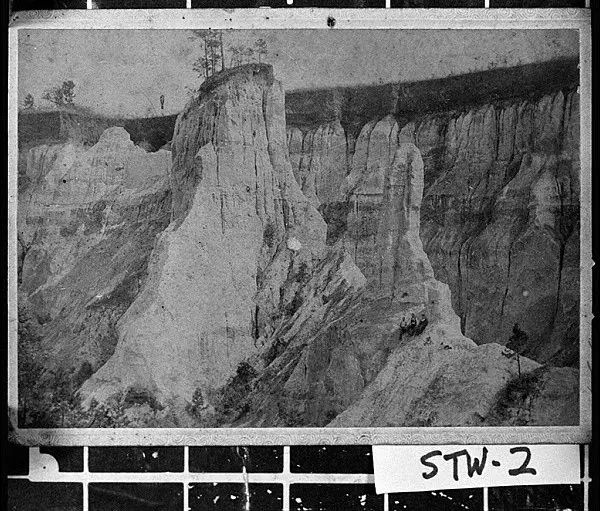
With heavy rain, these furrows deepened, eventually forming into substantial gullies that continued to grow. Poor soil management and farming practices created Providence Canyon. Within 100 years, the canyons you see today were formed. The tallest sections are up to 150 feet deep. Although is unusual and particularly gorgeous, it's worth remembering that this landscape is inherently unnatural and secondary to destructive agricultural practices.
Erosion is still active today. Lateral erosion causes the rim to recede and evidence of this can be seen along the perimeter where broken fencing hangs over the canyon's ledge. Pines and shrubs help stabilize the canyon floor and thus prevent vertical erosion.

This trail itinerary gives you the full tour of the park, including the Backcountry Trail (red blazed) and then descends into all of the marked canyons (1-9). I completed this as a day hike, but you can always choose to camp overnight at one of the 6 available sites on the Backcountry Trail.
Below is the map of Providence Canyon State Park, as provided by GA State Parks. This hike started from the Visitor Center (delineated by the parking icon in the top-right section of the map) and commenced along the black/white checkered Canyon Loop Trail moving clockwise. After enjoying views from the canyon rim at overlooks (1-5), the Canyon Loop Trail intersected the red-blazed Backcountry loop and plunged into the Georgia hardwood forest.

There are several inclines and declines along this route, but nothing considered strenuous. In the winter, views through the bare trees are plentiful. If hiking between July and September, look for the rare Plumleaf Azalea, which is unqiue to this specific region.

If the terrain elevation changes get the most of a hiker, there are a few spots to sit and rest along the route. Hiking this trail in mid-February and early in the morning meant that the Backcountry Trail had few fellow hikers. If you're looking for privacy in the park, this trail is where you will find solace as compared to the busier canyon trails.

Eventually as you move along the route, you will cross a small creek via a bridge. And from here you will follow the creek bed, often wet and flowing from recent rains, towards the main attraction - the canyons. Keep in mind, your feet may get wet here. Either wear boots or be willing to get muddy in your sneakers.
The vibrant red and orange colors you see in the creeks at Providence Canyon State Park are primarily caused by iron oxide leaching out of the canyon walls and mixing with the water. The land here has a rich earthy smell to it. The combination of high-iron minerals, damp clay, and a specific biological process that thrives in its humid, gully environment lends to this scent.

Once you've traversed the red clay creek, you'll reach signage for an intersection with the Canyon Loop Trail. Cross the creek and head briefly uphill along this route. You'll reach an intersection directing you towards canyons 6-9. From here it's a choose your own adventure hike.

Use the map available online or at the Visitor Center to gradually snake your way out-and-back through each of the individual canyons. Signage is ample and these trails are usually heavily visited, so keeping to the path is easy. I started with 6-9 and worked my way backwards. Each individual canyon has it's own unique formations and highlights.

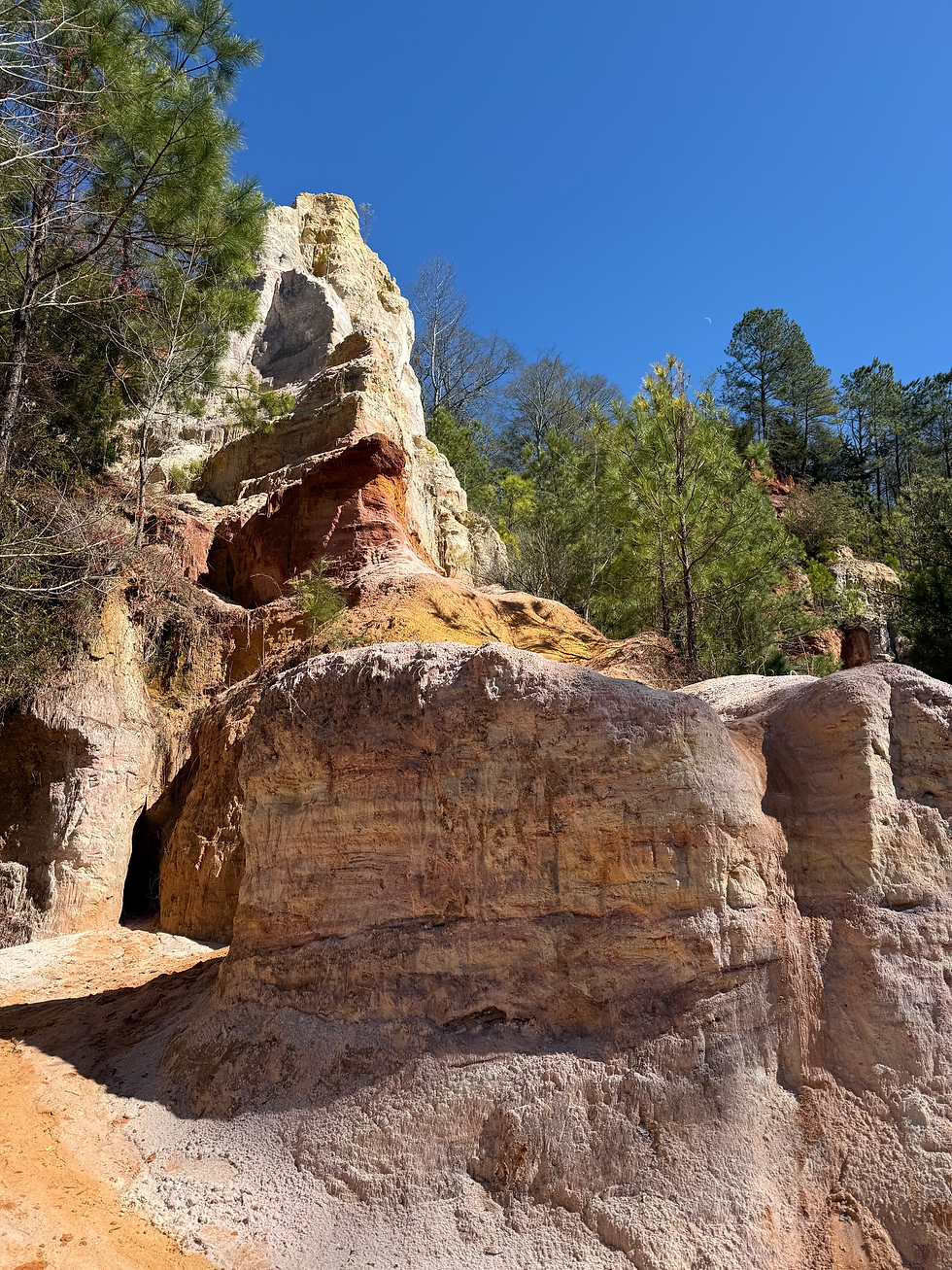
There are 43 different colors of sand and soil in these formations, varying from deep red, to beige, to a striking light purple. The exposed walls reveal a geologic record dating back 60 to 74 million years ago.
Once you finish winding your way beneath the canyon rim, take the remainder of the Canyon Loop Trail back to the Visitors Center and parking lot. The final push to complete this hike is where you will find most of your elevation gain. It is gradual, but for those who need to take it slower, there are a couple benches along the way to take a break.
**Official Park Map: https://gastateparks.org/sites/default/files/parks/pdf/trailmaps/ProvidenceCanyon_TrailMap.pdf
--Happy Hiking!


Comments